whitetrike's pick · Updated November 2026
LONGER Ray5 Laser Engraver and Cutter Machine
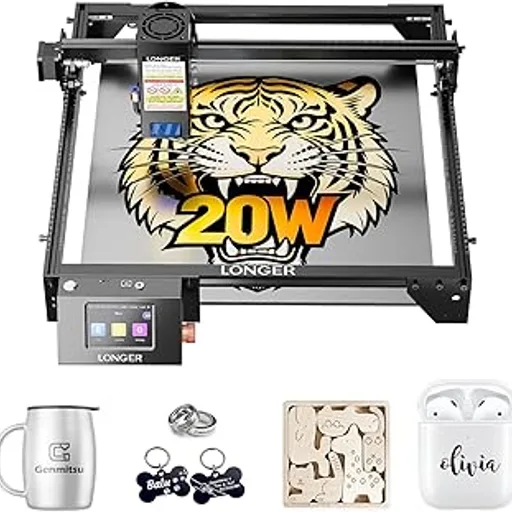

A laser engraver like this may suit a hobbyist, a small workshop, or a maker who wants a larger working area without moving up to a full shop machine. The stated 20W power and 400 x 365mm workspace suggest a tool aimed at people who want to engrave and cut a wider range of materials, but the real question is not the headline number alone. It is whether the machine matches the materials, enclosure, ventilation, and safety setup that your space can support.
This kind of product is worth considering when the goal is more than occasional desk-level crafting. A larger bed can make layout easier for signs, panels, gift items, or repeated parts, and a stronger laser can open up more material options than a lower-power unit. For buyers comparing compact hobby machines, the workspace size matters as much as raw power because it affects what can be placed, aligned, and repeated without constant repositioning. If you already know your projects need room to breathe, that larger footprint may be the main reason to look at this model.
The main thing to verify before buying is the practical setup around the machine, not just the machine itself. Laser engravers often need proper ventilation, a stable surface, compatible software, and a clear sense of which materials are safe to process. It is also worth checking how easy the machine is to calibrate, how the frame handles repeat runs, whether the included accessories cover your actual projects, and how much assembly is expected. Those details can matter more than the title description.
The evidence available here is limited to the product listing, so the safest approach is to treat the published specs as a starting point rather than a full promise of performance. A 20W label can be useful, but wattage alone does not tell the whole story about precision, edge quality, speed, or long-run reliability. The same goes for the stated work area. It shows capacity, not how comfortable the machine is to live with once it is set up. Buyers should compare controller features, software support, safety features, and material guidance before assuming the listed specs will translate into the kind of results they want.
This may fit someone who has moved past casual crafting and wants a machine with enough room and power to handle more serious engraving and cutting tasks. It is less about impulse buying and more about matching the tool to the workspace and project list. If your priority is a larger bed, stronger output, and a machine class that can support more ambitious projects, this is the sort of engraver that deserves a close look. If you are still sorting out your materials, ventilation, and software needs, those are the things to confirm first.
Amazon product links on this guide are not currently affiliate links. Neither whitetrike nor Buyer Field Guide earns an affiliate commission from them.
See current price